
GIS Holds SHARIA CAPITAL MARKET SCHOOL X SHARIA BANKING, a Collaboration Between the GIS LSO FEB, and the SHARIA BANKING Student Association
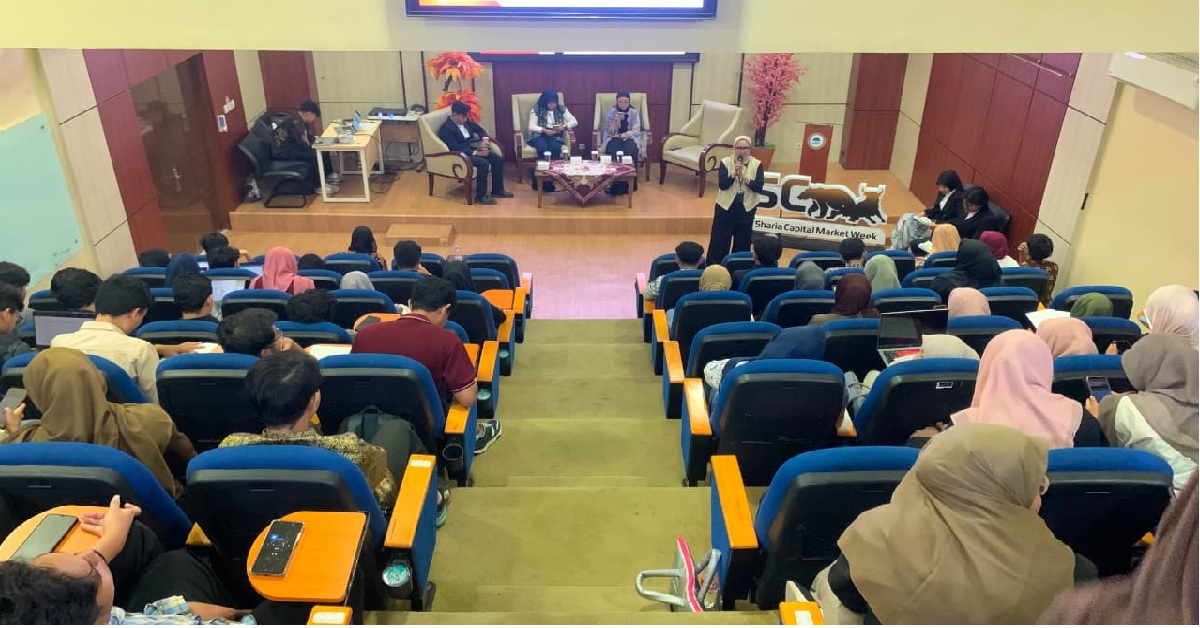
On Thursday, June 11, 2026, the Sharia Investment Gallery (GIS) FEB UIN Syarif Hidayatullah Jakarta, in collaboration with the Sharia Banking Student Association (HMPS PSY), successfully held the 2026 Sharia Capital Market School (SCMS) at Theater 2, Faculty of Economics and Business, UIN Syarif Hidayatullah Jakarta. This event is part of the larger Sharia Capital Market Week (SCMW) 2026 series, themed "From Literacy to Ethical Action: A School for Young Investors."
SCMS 2026 serves as a platform for education and development of Sharia capital market literacy for students, particularly Sharia Banking students. This event was organized with the approval of the Vice Dean III for Student Affairs, Alumni, and Partnerships, as a tangible contribution to increasing the younger generation's understanding of the importance of financial management, Sharia investment, and ethical and sustainable financial decision-making amidst the increasingly dynamic developments of the modern financial industry.
The event began at 9:00 a.m. Western Indonesian Time (WIB) with participant registration and was officially opened by the Master of Ceremonies, Muhammad Zahry from the GIS FEB UIN Jakarta and Syifa Maulani Syafa'at from the HMPS Sharia Banking. The opening ceremony continued with a recitation of the Divine Word, the singing of the national anthem Indonesia Raya, and remarks from the Deputy Chairperson of GIS FEB UIN Jakarta, Aini Fathi Wahdah; the Chairperson of Sharia Capital Market Week 2026, Lutfiah Prihandini; and the Chairperson of HMPS Sharia Banking, Dimas Rezka Mawlasaladin. The opening ceremony then concluded with a documentation session with all participants and committee members.
Entering the main session, the seminar was divided into two main sessions featuring speakers from strategic institutions in the Indonesian capital market industry. The first session was moderated by Muhammad Farhan Fatturohman and featured speakers from the Indonesia Stock Exchange (IDX), the Financial Services Authority (OJK), and the Indonesian Central Securities Depository (KSEI).
The first session was delivered by Laraza Annisa from the Indonesia Stock Exchange, who discussed education on the sharia capital market, the principles of sharia investment, and the development of sharia investors in Indonesia. Her presentation explained that investing in the sharia capital market is a buying and selling activity based on sharia principles and free from elements of usury (riba), gharar (gharar), and maysir (gambling).
The next session, delivered by a representative from the Financial Services Authority, focused on the importance of financial planning, improving financial literacy for the younger generation, and raising awareness of illegal online lending practices and online gambling, which are rampant in the digital era. This presentation emphasized the importance of financial management skills from a young age as a foundation for future financial well-being.
Next, Anggitha Silviani Dewi, Education Staff for KSEI's Investor Services, delivered a presentation from the Indonesian Central Securities Depository (KSEI). In this session, participants were introduced to the structure of the Indonesian capital market, the function of the Indonesian Central Securities Depository (KSEI) as a securities depository and settlement institution, and the KSEI AKSes service, which supports transparency and investor protection.
The second session was moderated by Safira Audia Rahma and featured Muhammad Rifqi from the Deposit Insurance Corporation (Lembaga Penjamin Simpanan) and Rendi Pamungkas, Partnership Campus Support from Phillip Sekuritas Indonesia. In this session, participants gained an understanding of basic investment concepts, the mechanism for opening an investment account through the POEMS application, and the importance of developing investment habits from an early age as a step towards financial freedom.
The event was interactive, with a question-and-answer session between participants and speakers discussing various issues related to sharia investment, risk management, and opportunities for the younger generation in the Indonesian capital market. Participants' enthusiasm was also evident in the educational games organized by the committee to reinforce the material and foster an active and enjoyable learning atmosphere.
The event concluded with a prayer and the presentation of certificates to the speakers as a token of appreciation for their contributions to supporting the improvement of sharia capital market literacy in the academic environment. Through SCMS 2026, it is hoped that students will be able to improve their understanding of sharia investment, develop better financial awareness, and play an active role in supporting the development of an inclusive, adaptive, and sustainable Indonesian sharia capital market ecosystem. (ah)