
Lecturer and Student Master’s Program in Islamic Economics Presents Indonesia–Türkiye Cash Waqf Research at Sakinah Türkiye 2026
SAKARYA, TÜRKIYE, October 27, 2026 – A lecturer and students from Universitas Islam Negeri (UIN) Syarif Hidayatullah Jakarta collaboratively presented their research at Sakinah Türkiye 2026, the “Global Forum on Islamic Finance,” held under the theme “Islamic Finance Integration for Global Crisis Resilience” on Tuesday, October 27, 2026. The article, titled “From Charity to Capital: A Comparative and Jurisprudential Analysis of Cash Waqf-Linked Sukuk in Indonesia and Waqf Governance in Türkiye,” was co-authored by Nofrianto, Viqri Maulana Fachreza, and Ummul Chairat Rais.
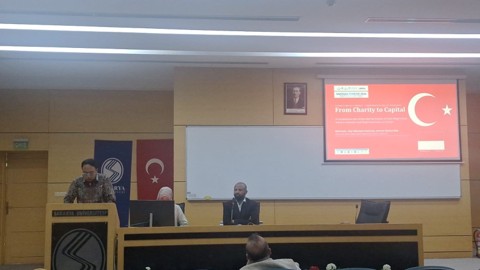 Figure 1. The paper “From Charity to Capital” is presented at Sakarya University during Sakinah Türkiye 2026.
Fachreza presented the article, which he wrote with Nofrianto and Rais, before the moderator and other delegates. He opened with a question that seems simple but is fundamental: Why does Indonesia already have a sovereign cash waqf-linked sukuk (CWLS) while Türkiye does not? Cash waqf was codified in Indonesia only in 2002, and CWLS has operated only since 2020. Türkiye, by contrast, has a centuries-old tradition of productive cash waqf (para vakıfları) dating back to the Ottoman Sultanate.
The international forum was organized by the Indonesian Association of Islamic Economists (Ikatan Ahli Ekonomi Islam [IAEI]), Sakarya University, IAEI Türkiye, and the Research Center for Islamic Economics and Finance (ISEFAM), together with the Hajj Financial Management Agency (Badan Pengelola Keuangan Haji [BPKH]), and was supported by several universities as co-hosts. According to official publicity materials, the program ran October 26–28, 2026, in Sakarya and Istanbul, combining a conference with field studies on the Ottoman-era Islamic economic and financial heritage. The forum poster lists keynote speakers including Aam Slamet Rusydiana (Chair of IAEI Türkiye and lecturer at Sakarya University), Fadlul Imansyah (Head of the BPKH Executive Board), Mehmet Asutay (Durham University, United Kingdom), and Hakan Aslan (Associate Professor, Sakarya University). Topics include the integration of zakat and waqf, green sukuk, Islamic banking resilience, and global regulatory harmonization.
The article’s main finding is that Indonesia’s three-institution governance model, combined with the doctrine of temporary waqf (waqf mu’aqqat), has bridged the tension between the perpetual nature of waqf and the fixed maturity of sukuk. In this model, the Ministry of Finance acts as the sovereign sukuk issuer, Bank Indonesia as facilitator, and the Indonesian Waqf Board (Badan Wakaf Indonesia) as the national nazir (waqf manager). The jurisprudential basis is Fatwa No. 32 of 2002 of the National Sharia Council of the Indonesian Ulema Council (DSN-MUI), which revived the minority opinion of Hanafi scholars, associated with Imam Zufar, along with that of some Maliki scholars, permitting cash waqf. On the sukuk side, CWLS rests on sovereign ijarah and wakalah sukuk backed by real state assets and a state guarantee of the principal.
According to the authors, the main obstacle to replicating a similar instrument in Türkiye lies not in doctrine or history but in institutional coordination capacity. No single authority in Türkiye plays the bridging role that three institutions jointly perform in Indonesia. From a jurisprudential perspective, Türkiye’s cash waqf practice can itself serve as a reference, so Türkiye does not need to adopt Indonesian jurisprudential thought.
The authors also openly acknowledged the study’s limitations. The research relies on secondary literature and Indonesian primary law, does not yet draw on Turkish-language legal texts or interviews, and infers doctrinal compatibility from Ottoman practice rather than from contemporary fatwas in Türkiye. Future research will therefore focus on testing scholarly acceptance, conducting a Türkiye-focused feasibility study, and extending the framework to other waqf-rich countries.
The presentation concluded by emphasizing that the Indonesia–Türkiye relationship is a two-way dialogue. Indonesia shows that the tension between perpetual waqf and fixed-term sukuk can be resolved within a single generation once jurisprudential questions are settled, while Türkiye shows that historical wealth and doctrinal consensus are not enough without the right institutional design. The authors’ collaboration in this session reflects universities’ efforts to deliver Islamic finance research that is relevant to cross-country policy, while opening opportunities for technical exchange and further joint research between Indonesia and Türkiye. (mes)