
Towards a Global Islamic Business School, FEB UIN Jakarta Strengthens Governance of the Doctoral Program in Islamic Banking and Accelerates AACSB International Accreditation
JAKARTA – The Faculty of Economics and Business (FEB) at UIN Syarif Hidayatullah Jakarta continues to strengthen its position in the internationalization of higher education. Following the success of the Sharia Banking Doctoral Study Program in achieving "Excellent" accreditation from the Independent Accreditation Board for Economics, Management, Business, and Accounting (LAMEMBA), FEB UIN Jakarta is now preparing for global recognition through international accreditation from the Association to Advance Collegiate Schools of Business (AACSB).
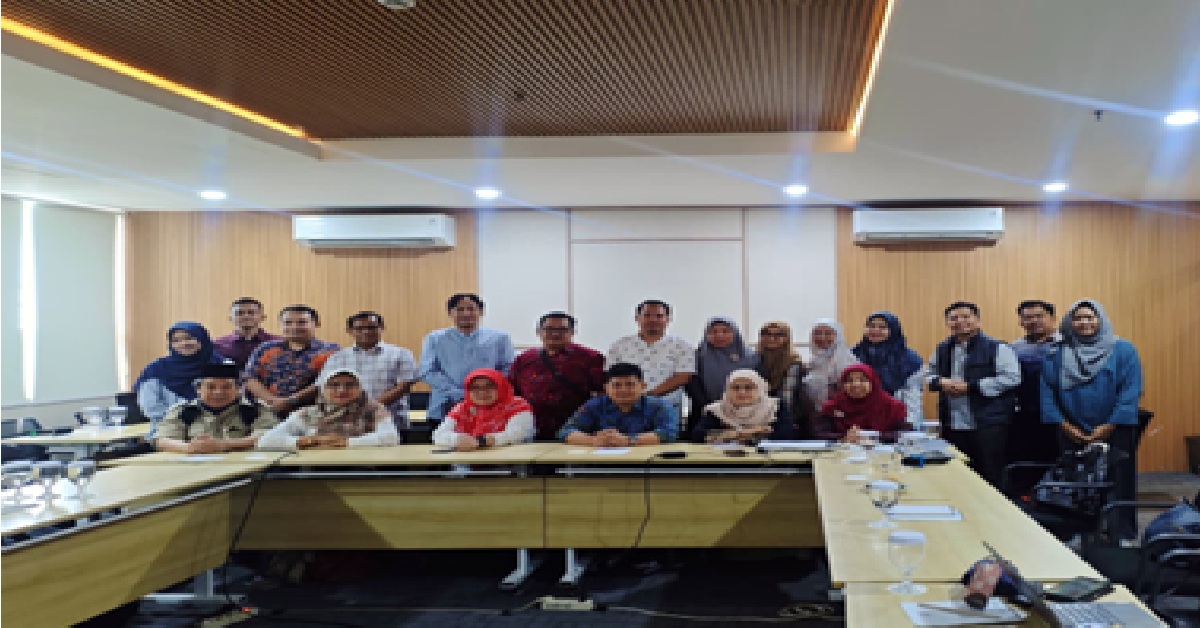
This strategic step was realized through the holding of a Workshop on Evaluation and Strengthening of Academic Governance for the Sharia Banking Doctoral Study Program, which took place solemnly on Tuesday, August 18, 2026, at the Adia Convention Center, UIN Syarif Hidayatullah Jakarta. The event was attended by the Dean's Office, the Academic Senate, the Quality Assurance Group (GJM), as well as all lecturers, promoters, and examiners of the FEB UIN Jakarta doctoral program.
Commitment to Becoming a Pioneer of Global Islamic Business Schools
In his opening remarks, the Dean of the Faculty of Economics and Business (FEB) at UIN Syarif Hidayatullah Jakarta, Prof. Dr. Ibnu Qizam, S.E., M.Sc., Ak., CA, emphasized that LAMEMBA's national "Excellent" designation is not the end, but rather a stepping stone to achieving higher international standards.
"We have established a strong institutional transformation vision to become a Global Islamic Business School. We are targeting the preparation of AACSB eligibility documents for the 2029–2030 period. Therefore, improvements in the quality, discipline of mentoring services, and standardization of doctoral student research must be implemented immediately and concretely," Prof. Ibnu Qizam emphasized.
He also emphasized the importance of increasing the proportion of Scholarly Academic (SA) qualified lecturers from the current ±20% to a minimum of 60% by 2029 as an absolute requirement for meeting faculty sufficiency standards under the AACSB.
Prioritizing Authenticity and the Uniqueness of Islamic Integration
The keynote speaker at this workshop was Prof. Sri Rahayu Hijrah Hati, PhD (Prof. Cici), Professor and Head of the Graduate Program in Management Science, Faculty of Economics and Business, University of Indonesia (UI). Prof. Cici shared best practices in doctoral program governance at UI and tactical strategies for addressing international assessment standards.
In her presentation, Prof. Cici explained that the AACSB international accreditation instruments (specifically the 2026 edition of the global standards) do not require ideal reporting documents, but rather institutional honesty (authenticity) and a track record of continuous quality improvement.
"AACSB assessors highly value the uniqueness of the institution. The limitations of dual regulations from the Ministry of Religious Affairs and the Ministry of Education, Science, and Technology at UIN Jakarta must be honestly conveyed as a narrative of the institution's operational history. The most crucial point is how FEB UIN Jakarta emphasizes its distinctive quality, namely the integration of economics and Islamic values (Integration of Knowledge), which is concretely translated into the Curriculum and Graduate Learning Outcomes (CPL)," stated Prof. Cici.
Prof. Cici also presented an analysis of lecturer portfolio mapping (SA, PA, SP, IP), an Assurance of Learning (AoL) quality assurance system based on direct measurement, and an estimate of the cost of a comprehensive institutional system transformation.
Breakthrough Academic Innovation for Doctoral Programs: The SLR Method and the Dissertation Publication Model
To address the challenges of doctoral students, the majority of whom are busy practitioners and academics, the Head of the Islamic Banking Doctoral Program, Prof. Nur Hidayah, M.A., Ph.D., along with a lecturer discussion forum, agreed on a number of curriculum reforms and a revolutionary standardization of dissertation guidelines.
Several key academic innovations that will soon be implemented include:
1. Implementation of a Special Systematic Literature Review (SLR) Class: The study program will split the 8-credit course for scientific publications, with 3 credits allocated specifically for SLR methods courses in Semester 1. This step is believed to be a game-changer, accelerating student graduation by an average of 3–3.5 years, as students are targeted to have a mature publication draft ready for submission to a reputable international journal before the final examination.
2. Wise Use of Academic AI (AI Literacy): Students are encouraged to master artificial intelligence technologies (such as ChatGPT, Claude, Elicit, SciSpace) to support writing productivity while still verifying fictitious references through the official Scopus database.
3. Manuscript Compilation Dissertation (Thematic Style): Students are given the alternative option of compiling their dissertation in the form of a compilation of three drafts of reputable journal articles bound by a single research umbrella, rather than simply the traditional five-chapter format.
4. Standardization of Dissertation Writing Guidelines: The new academic guidelines will limit dissertation titles to a maximum of 14 words, require abstracts to be written in three languages (Indonesian, Arabic, and English), and relax the requirement to include theoretical classifications (grand, middle, and applied theory) for purely quantitative research in economics to avoid administrative obstacles to graduation.
Reform of the Promoter-Student Relationship and Commission Meeting SOPs
The Faculty of Economics and Business (FEB) of UIN Jakarta also agreed to radical steps to streamline the management of mentoring. The relationship between lecturers and students is encouraged to shift from a hierarchical model to a collaborative partnership (value co-creation).
To maintain the quality of student services, FEB UIN Jakarta will implement a policy of temporarily suspending mentors who are proven to be negligent or complicating the student mentoring process. The distribution of mentoring allocations for mentors will also be transparently published through semester plenary meetings to avoid backlogs.
In addition, study programs require an internal Commission Meeting SOP. Before the student's examination session begins, the examining team and mentors are required to hold a 15-minute closed meeting to agree on instructions for improvement. This is done to protect students from contradictory revision instructions from different examiners, which often confuse them.
Follow-up Plan
As a form of accountability, the revised draft of the Dissertation Writing Guidelines and the new Academic Supervision SOP will be distributed to all lecturers for centralized input in early September. With this collective commitment, the Faculty of Economics and Business (FEB) of UIN Syarif Hidayatullah Jakarta is optimistic about realizing international-standard academic governance to produce outstanding doctoral graduates in Islamic banking who will have a broad impact on the public good. (FEB UIN Public Relations)
Tags (Keywords): FEB UIN Jakarta, Doctoral Program in Islamic Banking, International Accreditation, AACSB, LAMEMBA, Academic Governance, Postgraduate Program.